
Individuals paying out of pocket for dry needling can expect about $50 to $150 per session, though some listings show lower fees and some urban markets run higher. If you're an athlete trying to get back to running, lifting, dance, or sport, the answer depends on insurance coverage, how the clinic bills it, and how many visits your injury needs.
If you're in South Shore Massachusetts and your calf, shoulder, back, or hip has been stubborn for weeks, you've probably heard someone say dry needling helped them fast. Then the next question hits right away. What is this going to cost me?
That's the right question to ask. As sports physical therapists, we see athletes focus on the needle itself when the bigger financial issue is the full recovery plan. One visit is easy to price. A return to sport without setbacks takes more thought.
A high school soccer player in Bridgewater, a marathoner in Plymouth, and a dancer in Buzzards Bay may all hear the same recommendation, but they may not get the same bill. Billing model, clinic setup, provider training, and whether the service is folded into a broader rehab visit all change what lands on your statement.
Table of Contents
- Your Guide to Dry Needling Costs
- What Drives the Price Per Session
- Navigating Insurance for Dry Needling Treatments
- Budgeting for Your Full Recovery Plan
- Cost Comparison to Acupuncture and Injections
- Smart Strategies to Manage Your Treatment Costs
- Frequently Asked Questions About Dry Needling
Your Guide to Dry Needling Costs
A runner from Taunton strains a calf, keeps training through it, and then can't push off without pain. A baseball player from Raynham feels a shoulder knot that never fully settles down. A dancer in Middleborough has hip tightness that keeps coming back after class. In all three cases, dry needling may come up as part of treatment.
The price question matters because dry needling is often not handled like a routine, universally covered physical therapy service. Consumer-facing pricing also varies more than patients expect. Healthgrades lists some dry needling prices at about $15 to $60 per session, while broader pricing reviews often place out-of-pocket sessions around $50 to $150, and one Philadelphia clinic lists $150 to $180 per session. That spread tells you something important. There isn't one market price.
Practical rule: A quoted dry needling fee only tells you the price of that visit. It doesn't tell you what the full recovery will cost or whether that visit includes the rest of the rehab work you need.
For athletes, that distinction matters. Needling can calm down a guarded calf, painful upper trap, or overworked forearm, but it rarely solves the whole performance problem by itself. The stronger question is whether the plan around it is built to restore strength, control, loading tolerance, and return-to-sport confidence.
If you're comparing clinics in Bridgewater, Massachusetts or anywhere on the South Shore, don't stop at the posted needle fee. Ask what's included, who performs it, and whether the clinic treats athletes with an actual return-to-sport process rather than just symptom relief.
What Drives the Price Per Session
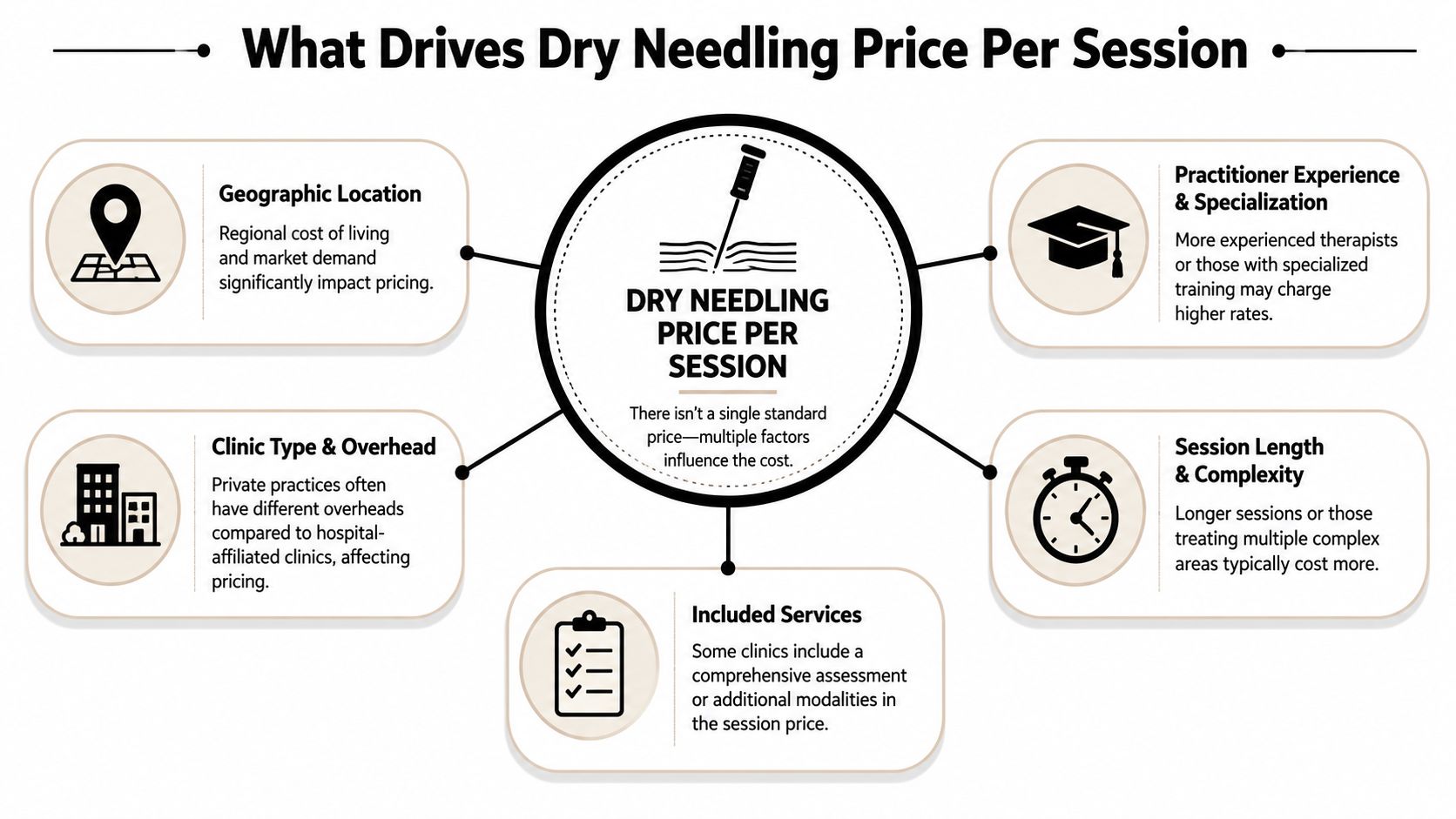
A dry needling session doesn't have a clean retail sticker the way a pair of running shoes does. Two clinics can target the same muscle group and still charge very differently because the fee reflects more than the needles.
Why there isn't one standard fee
The first variable is location. A clinic serving downtown Boston patients may price differently than one serving athletes in Bridgewater, East Bridgewater, West Bridgewater, or Buzzards Bay because overhead and local market expectations aren't the same.
The next variable is who is providing the treatment. Athletes often assume all dry needling is interchangeable. It isn't. A licensed Doctor of Physical Therapy with sports rehab training may deliver the technique inside a broader movement-based exam and treatment session, while another setting may present it more like a standalone wellness service.
A third factor is session complexity. Needling one irritable calf point after a recent strain is different from treating multiple linked areas in someone with low back pain, hip mobility limits, and altered running mechanics. More complex sessions usually involve more clinical decision-making and more time.
What athletes should ask before booking
Billing surprises are common. The same procedure can feel affordable or expensive depending on what's wrapped around it.
Ask these questions before your first appointment:
Is this a standalone fee or part of a full PT visit
Some clinics charge specifically for dry needling. Others fold it into a larger rehab appointment.Who performs the treatment
If you're paying for the cost of dry needling treatment, you should know whether you're seeing a licensed physical therapist and whether sports rehab is part of the visit.How much of the visit is dedicated to evaluation and exercise progression
Athletes usually need more than passive care. A good session often includes loading advice, mobility work, strength progressions, or sport-specific modifications.Are other services included
In sports settings, treatment may be paired with manual therapy, exercise instruction, running gait analysis, dance-specific movement review, or return-to-sport testing.
The posted fee matters less than the treatment model. A lower price can still be poor value if you leave without a plan for training, practice, and progression.
That's why comparing clinics only by dry needling price can lead athletes in South Shore Massachusetts to the wrong choice. You're not buying a needle insertion. You're paying for clinical reasoning, context, and a plan that fits your sport.
Navigating Insurance for Dry Needling Treatments
Insurance is where most confusion starts. Patients hear “physical therapy” and assume everything inside that visit is covered the same way. Dry needling often doesn't work that cleanly.
Why coverage feels inconsistent
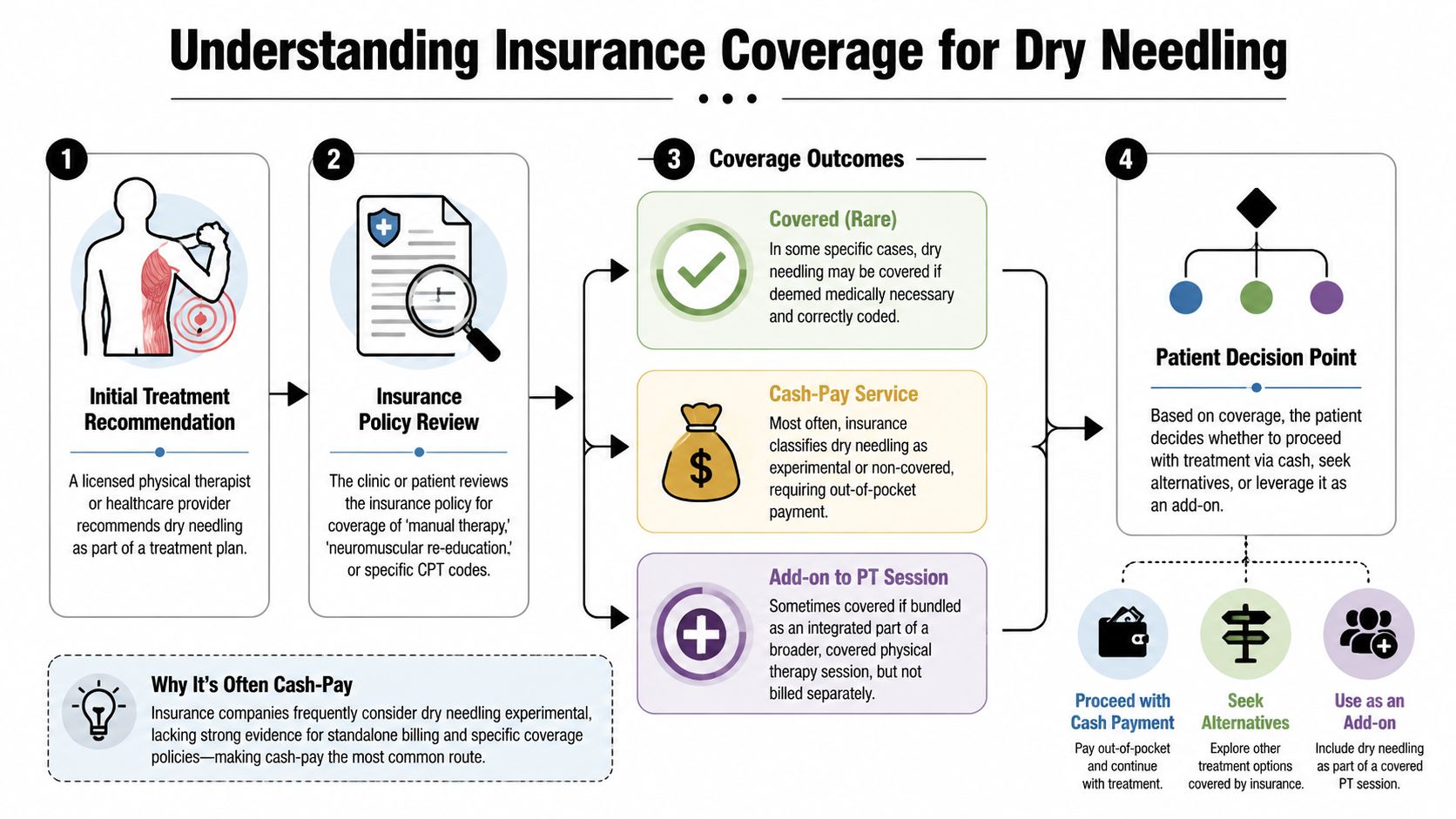
In the United States, dry needling is commonly priced as a cash-pay add-on rather than a universally bundled physical therapy service, with many patient-facing fee schedules clustering around $50 to $150 per session when insurance doesn't cover it. The key issue is the billing model. A clinic may bill a separate dry needling fee, include it within a broader therapy visit, or rely on other reimbursable physical therapy coding structures depending on payer rules.
That's why two athletes with similar symptoms can get very different out-of-pocket costs. It's not always about the needle technique itself. It's about how the visit is documented, coded, and processed by the plan.
For Massachusetts patients, this means you need to think beyond “Do you take my insurance?” A clinic can accept your insurance and still have dry needling handled as a non-covered add-on.
This short video gives a useful overview of how clinicians think about the treatment itself:
Questions to ask before your first visit
Call your insurer before treatment starts. Don't wait until the Explanation of Benefits arrives.
Use a checklist like this:
Ask whether dry needling is covered when performed by a physical therapist
Use that exact phrase. Don't assume “manual therapy” means the same thing.Ask whether it is processed as part of a physical therapy visit or as a separate non-covered service
This is often the difference between a routine copay and a direct out-of-pocket charge.Ask what your deductible, coinsurance, or visit limits mean for this episode of care
Even covered PT visits can become expensive if you haven't met your deductible.Ask for details in writing when possible
A phone answer helps, but written confirmation is better.Review your EOB carefully after the first visit
If you've never looked at one closely, this guide on expert EOB advice from One For All does a good job breaking down what the insurer paid, what was adjusted, and what may still be your responsibility.
Insurance rarely rewards assumptions. Athletes who ask specific billing questions before visit one usually avoid the most frustrating surprises.
If you're weighing care in Bridgewater, Buzzards Bay, or Middleborough, have the front desk verify benefits and explain whether dry needling is billed separately, bundled into PT, or offered as cash pay. That one conversation can save a lot of frustration.
Budgeting for Your Full Recovery Plan
The athlete question isn't really “What does one session cost?” It's “What's this injury going to cost me to fix so I can train again?”
That's the right frame. Dry needling is often part of a plan, not the plan itself.
Think in episodes of care, not single visits
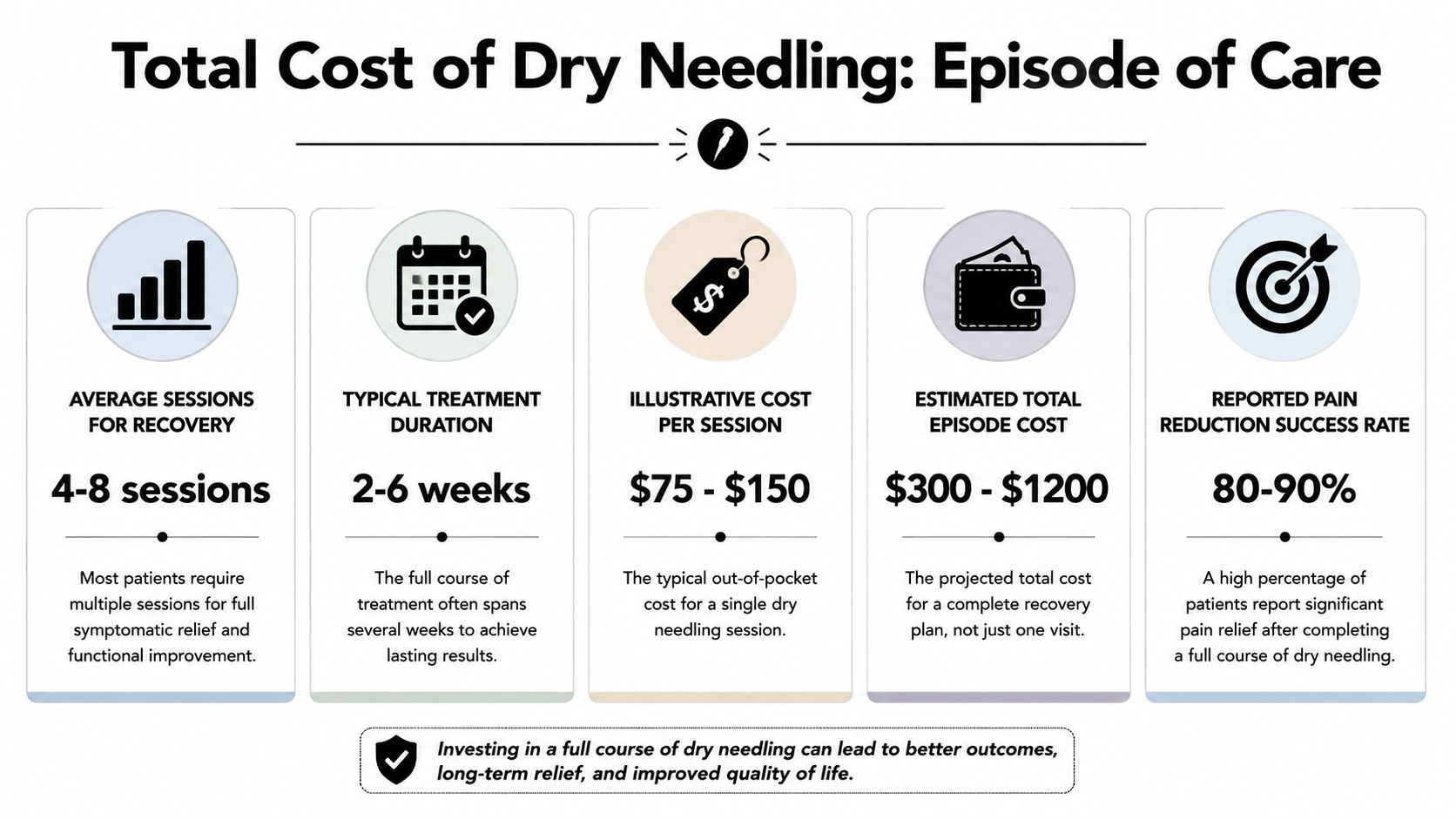
Health-focused consumer guidance notes that most patients receive 3 to 6 sessions of dry needling to resolve an issue. For an athlete, that usually means the session count should be judged against the problem you're trying to solve. A fresh hamstring strain, post-op stiffness, recurring shoulder pain with lifting, and chronic running-related calf tightness do not behave the same way.
A single visit may help pain and muscle guarding. It may not be enough to change movement quality under sport demands. That's why smart budgeting means asking how dry needling fits into the whole block of rehab care, including exercise progression and return-to-play decisions.
For athletes, the useful number isn't the price of one needle session. It's the cost of the entire episode of care needed to get back to sport without cycling back into the same problem.
Where dry needling fits in a sports rehab plan
Dry needling tends to make the most sense when it opens the door to better rehab. That may look different depending on the athlete:
Runner with calf or hip symptoms
Needling may reduce guarding, but lasting progress often comes from load management, strength work, and sometimes sports medicine and rehab that includes gait analysis and a training return plan.Dancer with overuse pain
Temporary symptom relief matters, but turnout control, landing mechanics, and rehearsal volume often matter more.Post-surgical athlete, including ACL recovery
Needling can help with muscle inhibition or stiffness in some cases, but it doesn't replace strength milestones, hop testing, and staged return-to-sport testing.Throwing or overhead athlete
Shoulder or forearm relief is only useful if scapular control, trunk mechanics, and workload tolerance improve too.
What doesn't work well is using dry needling as a recurring reset with no progression plan behind it. Athletes who feel better for a day or two but never address strength, mobility, tissue capacity, or sport mechanics usually end up spending more over time.
Cost Comparison to Acupuncture and Injections
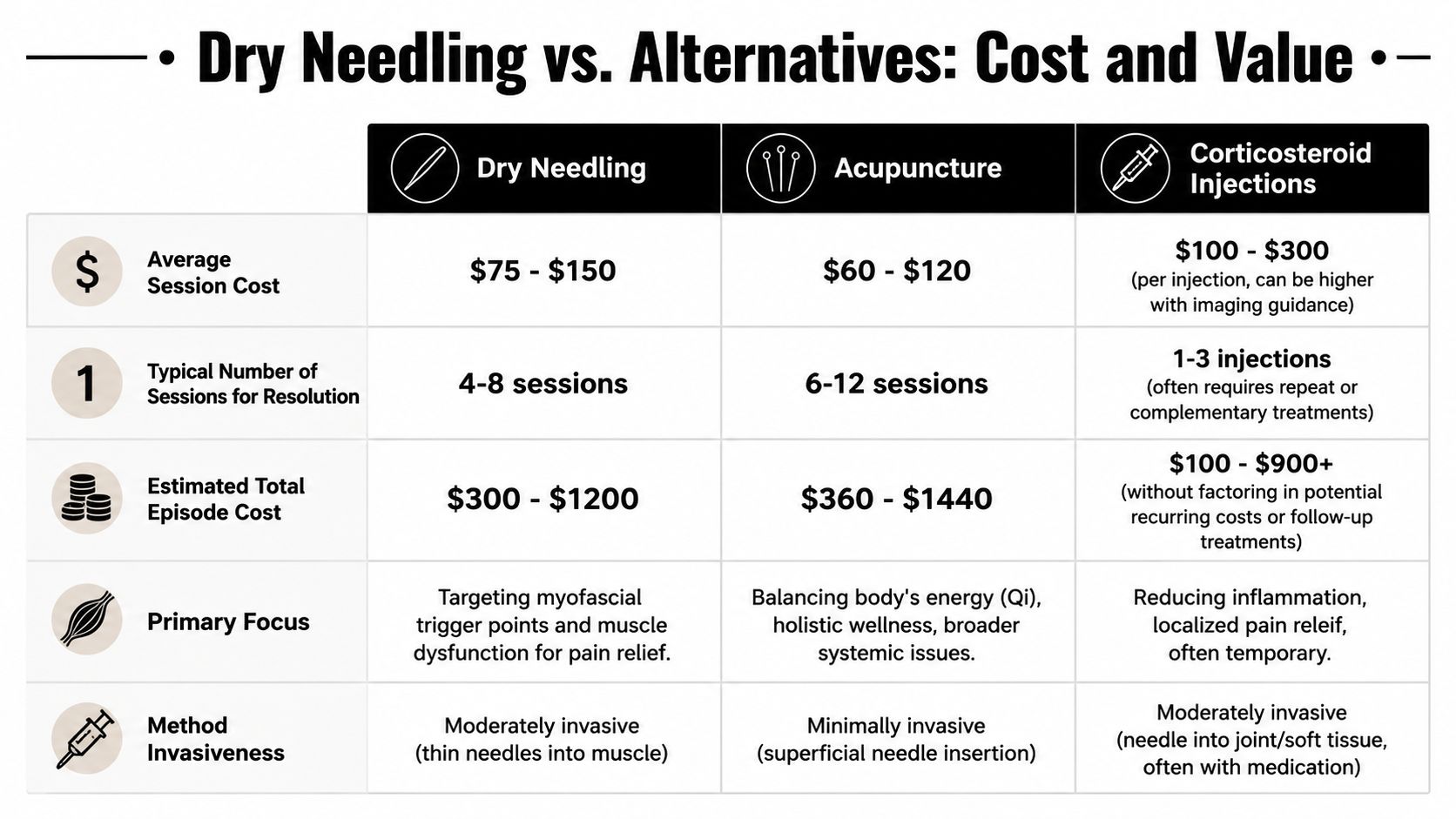
Athletes often compare dry needling with acupuncture or corticosteroid injections because all three may come up in the same conversation. The problem is that they aren't trying to do the same job.
Different tools for different goals
Dry needling in a physical therapy setting is usually aimed at muscle and myofascial dysfunction. For athletes, that often means trying to reduce pain, improve tolerance to movement, and create a better window for exercise and skill work.
Acupuncture uses a different clinical framework. Some patients pursue it for broader wellness goals or symptom management that goes beyond sports performance concerns.
Injections are another category entirely. They may be used to reduce inflammation or calm a painful area, but they don't teach the body how to move better under load.
What matters most for athletes
For a runner from Plymouth, a football player from Taunton, or a dancer on the South Shore, the better question is not which option sounds strongest. It's which option matches the problem.
A simple way to understand it:
| Option | Best fit | Limitation for athletes |
|---|---|---|
| Dry needling | Muscle irritability, trigger points, painful guarding, movement restriction | Usually works best as part of rehab, not by itself |
| Acupuncture | Patients seeking a different treatment model or broader symptom support | May not directly address sport mechanics or progressive loading |
| Injection | Cases where a physician is targeting inflammation or a specific painful structure | Pain relief alone doesn't rebuild strength, coordination, or resilience |
Some athletes also explore other recovery tools when inflammation is a major part of the picture. That's where services like laser therapy for inflammation may come up in a broader rehab conversation.
The mistake is treating these choices like interchangeable menu items. They each have different goals, different decision-makers, and different roles in a return-to-sport plan.
Smart Strategies to Manage Your Treatment Costs
If you want the benefits of dry needling without getting blindsided financially, focus on process. Most cost problems come from unclear billing and vague treatment planning.
A few practical moves help right away:
Ask for the full visit breakdown
Find out whether dry needling is a flat add-on, part of a timed PT session, or bundled into a broader treatment plan.Use tax-advantaged funds if eligible
Many patients use HSA or FSA dollars for qualified rehab expenses. Confirm eligibility with your plan administrator.Discuss package pricing carefully
Some clinics offer multi-visit bundles. That can help, but only if the plan matches your injury and goals.Track the total episode, not just one receipt
Keep a simple running list of evaluation charges, follow-up visits, add-ons, and any training modifications or recovery tools you're using.Learn basic healthcare spending tactics
Broader frameworks for effective healthcare cost reduction can help you think more clearly about comparing options, forecasting expenses, and avoiding duplicate or low-value care.Use lower-cost support between visits when appropriate
Home exercise, mobility work, and simple self-management tools often stretch the value of each session. Some athletes also pair treatment with strategies like how to use kinesiology tape when that fits the rehab plan.
The best money-saving move is still the simplest one. Get a clear diagnosis, a realistic plan, and a direct estimate before treatment starts.
Frequently Asked Questions About Dry Needling
Is dry needling the same as acupuncture
No. The needles may look similar, but the treatment models are different. In sports physical therapy, dry needling is typically used to address muscle and myofascial dysfunction as part of a rehab plan built around movement, strength, and return to sport.
Does dry needling hurt
It can be uncomfortable, but most athletes don't describe it as sharp pain the whole time. A twitch response, local ache, or temporary soreness afterward is common. The right expectation is that it may feel intense for a moment, then settle.
Is dry needling worth the cost
It can be, if it helps you move better and speeds progress inside a larger rehab program. It usually offers less value when it's used repeatedly without fixing the loading, strength, mobility, or sport-specific issues that caused the problem.
How do I know if I need dry needling or just exercise
That depends on your diagnosis, irritability level, training demands, and stage of recovery. Some athletes need only progressive exercise. Others do better when hands-on treatment creates a better starting point for exercise and sport progression.
How many sessions will I need
That varies by injury and goal. Some athletes respond quickly. Others need a short series of visits as part of a longer rehab progression. The more useful question is whether each session is moving you toward measurable progress in pain, motion, strength, and sport function.
Can dry needling help after surgery
Sometimes, but it depends on the procedure, tissue healing stage, and your surgeon's guidance. Post-surgical athletes, especially after ACL reconstruction or shoulder surgery, need a plan that respects healing timelines and objective return-to-sport criteria.
What should I ask at the first appointment
Ask what the diagnosis is, why dry needling is being recommended, how it fits into the larger plan, what your expected out-of-pocket cost is, and how progress will be measured. If those answers are vague, keep asking.
Consult a licensed physical therapist for individual guidance. Dry needling isn't appropriate for every patient, and online information should never replace an in-person evaluation.
If you're looking for athlete-centered rehab in Southeastern Massachusetts, Physical Therapy U can help you sort through both the clinical and financial side of treatment. With locations in Bridgewater, Buzzards Bay, and Middleborough, PTU works with runners, dancers, youth and adult athletes, and post-surgical patients who want a clear plan for recovery, performance, and return to sport.
