
That dreaded pop, twist, or roll—followed by a surge of sharp pain—is a moment every athlete knows and fears. If you've just sprained your ankle, your actions in the first 24 to 48 hours are critical for a faster, more effective recovery. As sports physical therapists, our licensed DPTs see this injury daily in our Bridgewater, Buzzards Bay, and Middleborough clinics.
Your immediate goal is to protect the joint and manage the initial swelling. This sets the stage for a much smoother return to sport, whether you're a runner from Taunton, a dancer from Plymouth, or an athlete at Bridgewater-Raynham High School.
Table of Contents
- What to Do for a Sprained Ankle
- When Should You See a Physical Therapist for a Sprained Ankle?
- Starting Gentle Movement to Restore Motion
- Building Strength and Stability to Prevent Re-Injury
- How to Safely Return to Your Sport
- Common Questions About Sprained Ankle Recovery
What to Do for a Sprained Ankle
The moment you go over on your ankle, your body kicks off a powerful inflammatory response to start healing the damaged tissue. For decades, the go-to advice was RICE (Rest, Ice, Compression, Elevation). While that wasn't bad advice, our understanding of soft tissue injuries has evolved significantly.
Today, sports physical therapists and athletic trainers follow a more modern, comprehensive approach known as the PEACE & LOVE protocol. This evidence-based framework, reviewed by our team of Doctors of Physical Therapy, is all about working with your body's natural healing process, not just trying to shut it down.
The First Few Days: It's All About PEACE
The "PEACE" part of the protocol guides your actions right after the injury happens. This isn't about being passive; it's about making smart, protective choices for your athletic recovery.
Here’s a summary of the most current, evidence-based approach for those first critical days. It shifts the focus from simple rest to a more proactive and intelligent form of care.
| Phase | Component | Action for Athletes |
|---|---|---|
| Immediate Care | P – Protect | Unload the ankle for 1 to 3 days. Use crutches if you have a significant limp to avoid stressing the ligaments. |
| Immediate Care | E – Elevate | Keep your foot propped up above the level of your heart whenever you're sitting or lying down to help drain fluid. |
| Immediate Care | A – Avoid Anti-Inflammatories | Inflammation is a key part of healing. Avoid using anti-inflammatory pills and be cautious with icing. |
| Immediate Care | C – Compress | Gently wrap the ankle with an elastic bandage or use compression tape to help manage swelling without cutting off circulation. |
| Immediate Care | E – Educate | Trust your body's ability to heal. Learn the difference between good and bad pain. A PTU clinician can guide you. |
This updated protocol provides a clear, effective roadmap for managing your injury from the moment it happens, ensuring you don't unintentionally slow down your body's recovery efforts.
Let's break down what those points mean for you in practice.
Protect: This means taking weight off the ankle. If you can't walk without a noticeable limp, it’s time for crutches. The goal is to avoid further stressing the injured ligaments for a day or two.
Elevate: Gravity is not your friend when it comes to swelling. Propping your leg up on a stack of pillows so your ankle is higher than your heart helps drain fluid away from the injury site.
Avoid Anti-Inflammatories: This is the biggest change from the old RICE method. We now understand that the initial inflammatory phase is essential for cleaning up damaged tissue and signaling the start of repairs. Popping anti-inflammatory meds can interfere with this. The same logic applies to aggressive icing; for more on this, check out MedAmerica Rehab Center's guide.
Compress: A simple elastic wrap (like an ACE bandage) can provide gentle compression. This helps limit excessive swelling without cutting off circulation. The wrap should be snug, but it should never cause numbness, tingling, or increased pain.
Educate: This is where we, as sports physical therapists, come in. A huge part of recovery is understanding your injury. Learn to listen to your body, avoid unproven treatments, and have confidence in the healing process. This is a foundational step in an active recovery, as detailed in this overview of ankle sprain management.
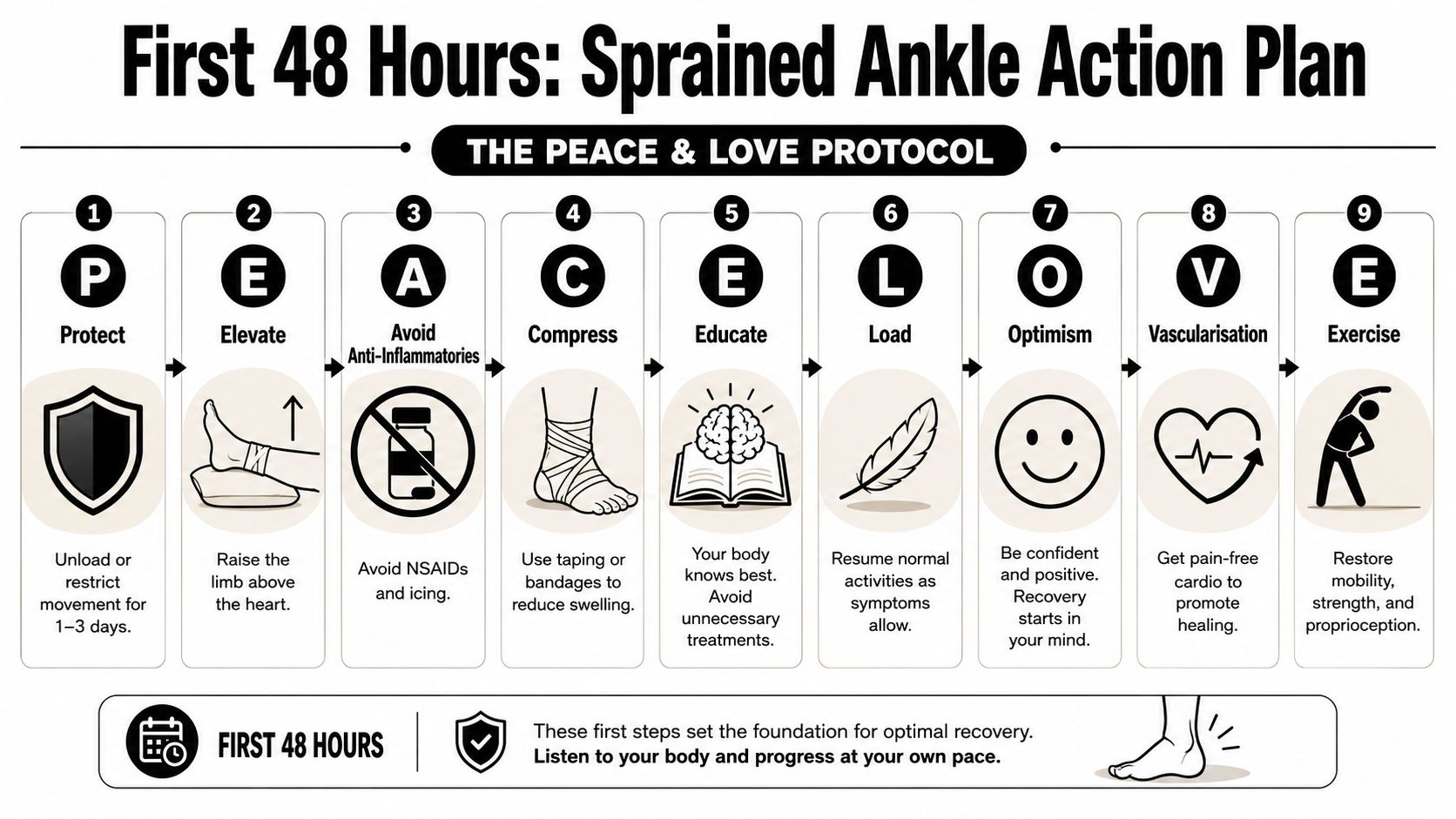
The "LOVE" part of the protocol comes next, focusing on a gradual return to movement and strength. But for now, focusing on PEACE will put you on the right path.
When Should You See a Physical Therapist for a Sprained Ankle?
It's tempting for athletes to try and "walk it off"—we see it all the time with players from East Bridgewater to West Bridgewater. But ignoring key warning signs is a risky play that can lead to chronic ankle instability (CAI). This nagging condition where your ankle constantly feels like it’s about to give out puts you on the fast track to more frequent, and often worse, sprains down the road.
Getting a professional evaluation early on from a sports-focused PT is the smartest move for any athlete.
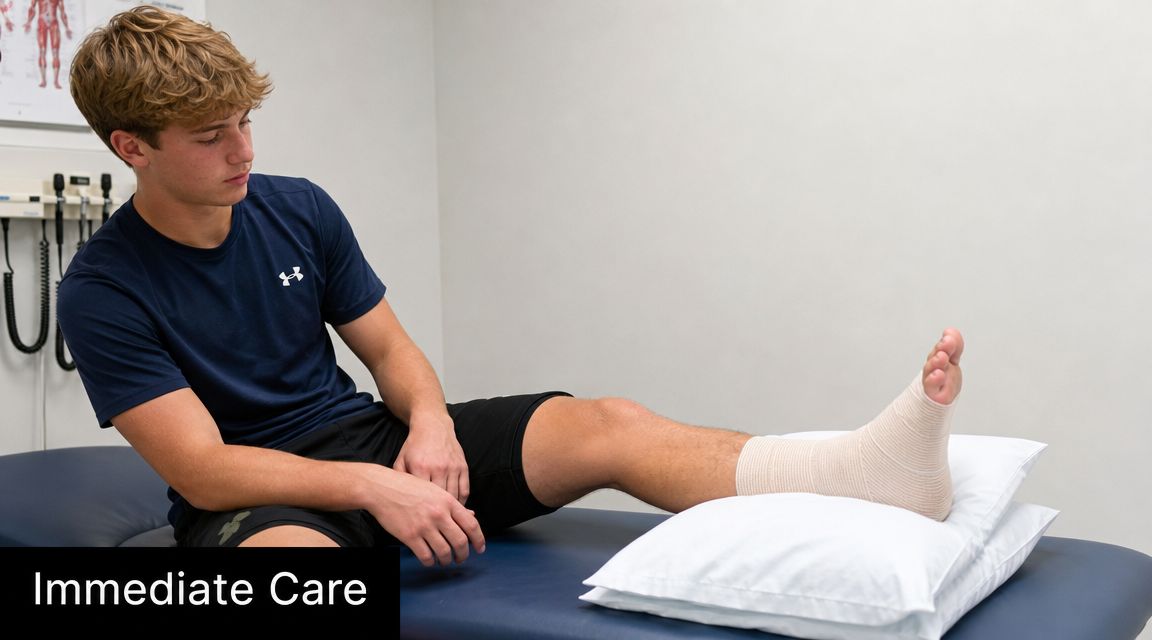
From our experience as sports physical therapists, we know there are clear signs that an injury needs a closer look. If any of the following sound familiar, it's time to get your ankle checked out by a professional.
Key Signs That Point to a PT Evaluation
Here’s a really simple but effective test: can you take four steps in a row without a limp or major pain? If the answer is no, you need an evaluation. This is a fundamental part of the Ottawa Ankle Rules, a screening tool we use to help rule out a potential fracture and decide on the best course of action.
Beyond that, other red flags that tell us it's more than a simple sprain include:
- Rapid, significant swelling and bruising that shows up within the first few hours.
- Any obvious change or deformity in the shape of your ankle or foot.
- Hearing or feeling a distinct "pop" or "snap" right when the injury happened.
- The pain just isn't getting any better—or is even getting worse—after a couple of days of following the PEACE protocol.
One of the biggest mistakes we see in our Bridgewater, Massachusetts clinic is athletes jumping back into their sport as soon as the pain is gone but before they've rebuilt their ankle's strength and stability. That’s a recipe for re-injury.
At Physical Therapy U, our team in Bridgewater, Buzzards Bay, and Middleborough does more than just treat the initial pain. We perform hands-on tests to figure out the severity of the sprain and design a recovery plan that's tailored specifically for you. The goal isn't just to get you back on your feet; it's to get you back to your sport safely and prevent this from happening again.
If you're still on the fence, we've put together a guide on how to know if you need physical therapy that goes into more detail.
Starting Gentle Movement to Restore Motion
Once the worst of the swelling and pain has subsided, many athletes we work with are tempted to stay off their ankle completely. They’re afraid of doing more harm. This is an understandable fear, but it's based on an outdated approach. In reality, the best thing you can do is introduce early, gentle, and most importantly, pain-free motion.
Keeping your ankle immobilized for too long can backfire, leading to more stiffness, muscle atrophy, and a much slower return to sport. Instead, we want to encourage controlled movement. This helps pump out lingering swelling, prevents the joint from getting stiff, and begins to re-establish the connection between your brain and your ankle.
Your First Active Steps
The guiding principle here is simple: listen to your body. If you feel a sharp pain, you're pushing too hard. The goal isn't a workout; it's to gently reawaken the joint and remind it how to move.
Here are a few of the go-to exercises our clinicians recommend for athletes at this stage of sprained ankle recovery:
- Ankle Alphabets: This is a classic for a reason. Sit down, prop your foot up, and pretend your big toe is a pen. Slowly and deliberately draw the letters of the alphabet in the air. This gets the ankle moving in all planes of motion without putting weight on it.
- Ankle Pumps: Gently point your toes away from you (plantarflexion), then slowly pull them back toward your shin (dorsiflexion). This simple pumping action is fantastic for improving circulation and reducing swelling.
- Gentle Circles: Make slow, small circles with your ankle. Aim for 10-15 rotations clockwise, then switch and go counter-clockwise. Keep the movement smooth and controlled.
It's crucial to understand why you're doing these. You're not just going through the motions. You are re-establishing that mind-body connection (proprioception) with the injured joint, boosting blood flow to help the ligaments heal, and laying the groundwork for the more intense strengthening and balance work that comes next.
These early movements are the foundation of your recovery. As you get stronger, they become the building blocks for more complex routines, like the ones in our guide on physical therapy exercises for runners that can help you plan your comeback.
Building Strength and Stability to Prevent Re-Injury
Feeling that initial pain fade is a huge relief, but it’s not the finish line. For athletes, this is where the real work begins—the critical phase that determines whether you bounce back stronger or set yourself up for chronic ankle instability. Being able to walk without a limp is one thing; being ready for the explosive demands of your sport is another entirely.
After an ankle sprain, your body’s natural defense is to essentially "turn down the volume" on the muscles surrounding the joint to protect it. Our first job as your PT is to get those muscles firing correctly again. We re-establish a solid foundation of support around that ankle before we can even think about returning you to play.
From Basic Holds to Functional Drills
Recovery is a methodical process, starting with exercises that re-establish control and build endurance in the small, stabilizing muscles that are key to ankle stability.
At PTU, we typically begin with exercises like these:
- Isometric Holds: This is strength training without movement. You’ll push your foot against a wall or even your other foot in four key directions (up, down, in, and out). By holding that muscle contraction for 5-10 seconds, you’re waking up the muscles without stressing healing ligaments.
- Banded Resistance: Once isometrics are comfortable, we introduce therapy bands. Now, you’ll perform those same four movements through a complete, controlled range of motion. This is how we start building dynamic, functional strength.
- Calf Raises: We start with two feet on the ground, then progress to single-leg raises. This builds power in the calf muscles, which are your primary shock absorbers for everything from running to jumping.
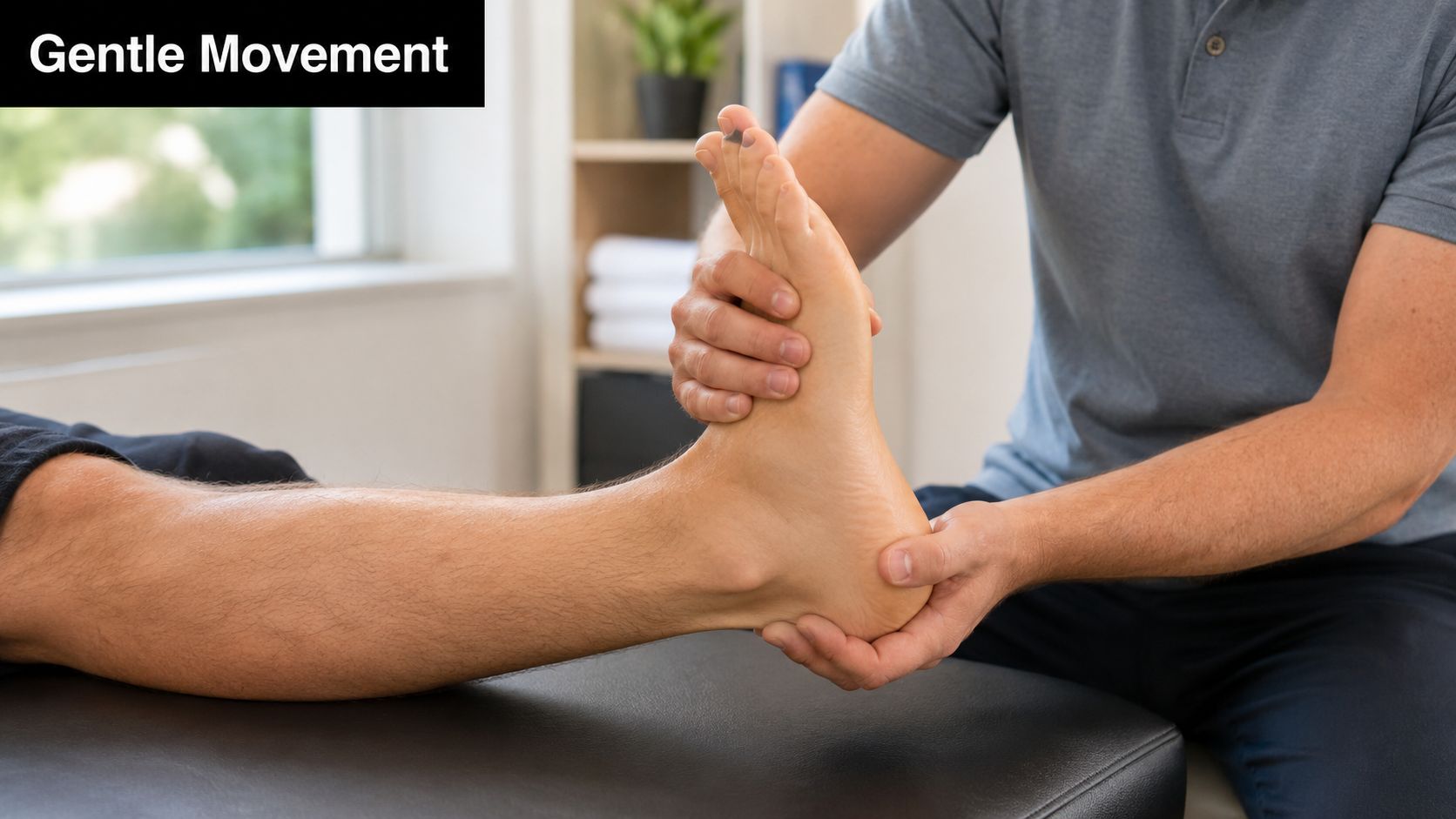
This targeted approach is your best defense against a nagging condition called chronic ankle instability (CAI), where the ankle feels like it could give way at any moment. It's shockingly common—as many as 70% of people who sprain an ankle can develop CAI if they don't complete a full rehab program. You can learn more about preventing long-term sprain complications from HSS, but the takeaway is clear: do the work now to avoid problems later.
As you get stronger, we shift focus to balance and stability, also known as proprioception. For athletes, this often means progressing to single-leg balance drills on unstable surfaces like a foam pad or a BOSU ball. While the principles of balance are universal and even key to programs like senior balance training in Lindenhurst, for an athlete, it's about building the subconscious confidence to cut, pivot, and land without a second thought. This kind of specific training is a core component of how we build resilient athletes, as detailed in our complete strength and conditioning program for athletes.
How to Safely Return to Your Sport
Walking without a limp is a huge milestone, but it's a world away from being ready for game day. The explosive cuts in soccer, the quick pivots in basketball, or the repetitive impact of a long run demand much more from your ankle. The final phase of a solid recovery plan is all about making a confident, full return to the field, court, or track.
This is where objective, return-to-sport testing becomes critical. We move far beyond simply asking, "Does it still hurt?" and instead focus on data to see if your ankle is truly ready for the demands of your sport. At PTU, we don't guess—we test.
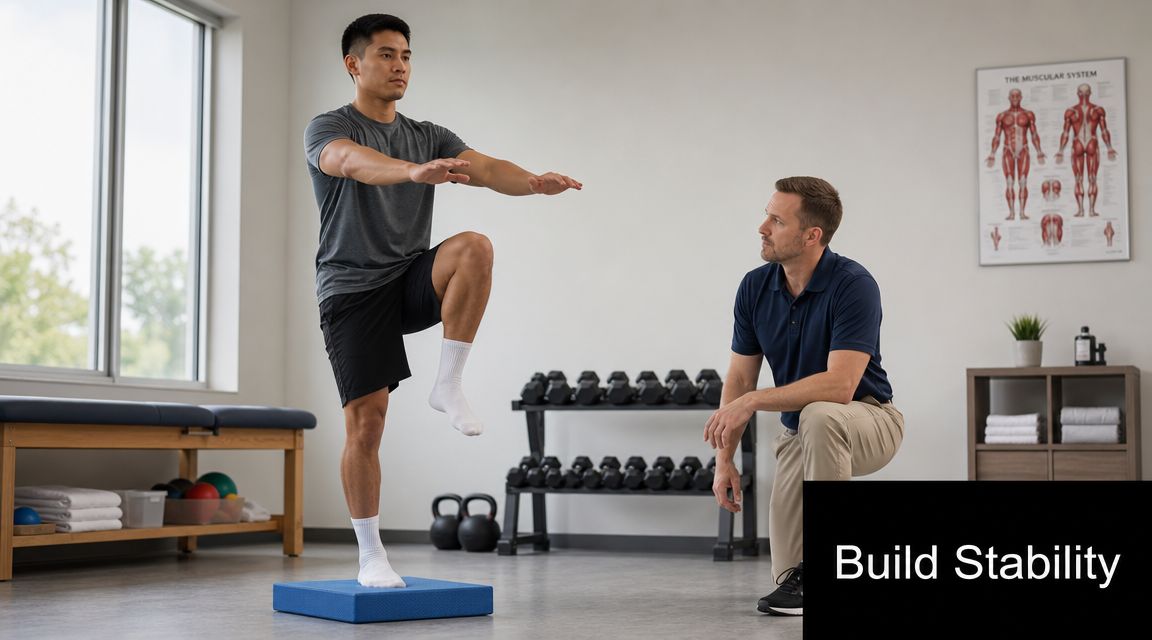
From the Clinic to the Field
Before clearing an athlete, a sports physical therapist will run you through a series of functional tests that are specifically designed to mimic the forces your ankle will actually face during competition. The goal here is simple: we need to see that your injured side can perform at least 90% as well as your uninjured side.
These tests aren't generic; they tell a specific story about your ankle's power, stability, and control.
- Hopping Tests: We'll measure your single-leg hops for distance, height, and speed. This is a fantastic way to see if you've rebuilt the necessary power and, just as importantly, if your ankle can absorb impact without giving way.
- Agility Drills: Expect to perform cutting, shuffling, and pivoting patterns. We're looking for your ability to change direction quickly and with total control, which is one of the most common ways people re-injure an ankle.
- Sport-Specific Movements: Your testing must reflect your sport. A soccer player needs to prove they can plant hard and strike a ball with confidence. A dancer from our specialized dance therapy program might need to demonstrate stability and control while returning to pointe work.
Passing these objective tests is often the deciding factor between a successful, long-term return and a frustrating cycle of nagging re-injuries. It's about ensuring you're not just healed, but truly prepared for the game.
For runners, this stage almost always involves a running gait analysis. We'll get you on a treadmill to analyze your mechanics, ensuring you haven't developed any bad habits or compensations that could lead to other injuries down the road. For many athletes, we might also recommend a transitional period of using supportive taping or a light brace during initial practices. This can provide an extra layer of support and confidence as you ease back into full participation.
Common Questions About Sprained Ankle Recovery
As sports physical therapists, we see a lot of sprained ankles walk through our doors in Bridgewater, Buzzards Bay, and Middleborough. After the initial shock wears off, the questions always start. Here are the answers to the most common things our DPTs get asked every day.
Should I Use Heat or Ice on a Sprained Ankle?
For the first 48 to 72 hours, stick with ice (or cold therapy). It helps constrict blood vessels, which is key for managing swelling and numbing that initial, throbbing pain. A good rule of thumb is 15-20 minutes of ice every 2-3 hours. After this initial phase, our clinicians often use interventions like dry needling to further manage pain and muscle guarding. Once that initial inflammatory phase has passed and swelling is down, you can introduce heat. A heating pad before your rehab exercises can be great for increasing blood flow and loosening up stiff tissues.
How Long Does a Sprained Ankle Take to Heal?
This depends entirely on the severity. A minor, Grade 1 sprain might have you feeling much better in one to three weeks. But for a severe Grade 3 sprain, where a ligament is torn completely, you could be looking at a 3 to 6-month journey to get back to your sport safely. The timeline is less important than the recovery process itself. Rushing back is the biggest mistake you can make. The real goal is completing a full rehabilitation program to rebuild your strength, balance, and stability so this doesn't happen again. As you work through your recovery, you might look into different ways to manage discomfort. For example, some people explore options like topical CBD for managing foot pain.
Should I wear an ankle brace after a sprain?
A brace provides external support, but it's not a substitute for rehabilitation. Relying only on a brace can lead to muscle weakness and poor proprioception (your joint's sense of position), increasing the risk of future sprains. Think of a brace as a helpful tool, not a cure. It should always be used alongside a targeted strengthening and balance program from your physical therapist to prepare you for the demands of your sport, from ACL recovery to general athletic training.
Don't guess your way through a sprained ankle recovery. Get a clear diagnosis and a personalized plan to get back in the game from the sports PT experts at Physical Therapy U. Our team on the South Shore is ready to help you return to your sport stronger and more resilient than before.
You can book your evaluation online today at our Bridgewater, Buzzards Bay, or Middleborough location.
