
You’re probably here because the athlete in your house, on your team, or in your clinic needs more than random workouts.
Maybe it’s a high school soccer player in Bridgewater, Massachusetts who’s been handed a lifting sheet with no progression. Maybe it’s a runner in Plymouth who keeps getting the same calf or knee pain every season. Maybe it’s a dancer in Middleborough trying to get stronger without feeling stiff, or a post-ACL athlete who’s been cleared for exercise but still doesn’t look ready for the speed and chaos of sport.
That’s where a real strength and conditioning program for athletes should start. Not with a trendy lift. Not with a copy-and-paste template. It starts with an athlete-centered plan built from movement quality, sport demands, injury history, and a realistic timeline for development. At PTU, that rehab-to-performance bridge matters because a safe program has to do two jobs at once. It has to improve performance and reduce avoidable setbacks.
Table of Contents
- First Assess Your Athlete Needs
- Blueprint Your Season with Periodization
- Structure a High-Impact Training Session
- Your Exercise Toolbox for All-Around Athleticism
- Master Recovery and Prevent Injuries
- Your Next Move A Sample Program and Expert Guidance
First Assess Your Athlete Needs
A program without assessment is guesswork. In sports physical therapy, that’s the same as prescribing treatment before making a diagnosis.

That matters even more for youth and high school athletes. The freshman baseball player from Taunton, the club soccer athlete from East Bridgewater, and the dancer from Middleborough may all need strength work, but they do not need the same plan. Generic programs usually miss the exact details that change results: asymmetry, movement control, prior injury, training age, and what the athlete is doing outside the gym.
Start with movement quality
The first screen is simple in concept and detailed in practice. We look at how the athlete moves before we decide how the athlete should load.
That means checking patterns like:
- Squat mechanics: Depth, trunk control, knee position, and whether the athlete can own the bottom without collapsing.
- Single-leg control: Balance, hip stability, pelvic control, and whether side-to-side differences show up under fatigue.
- Landing and deceleration: This is huge for field athletes, basketball players, volleyball players, dancers, and post-ACL athletes.
- Mobility restrictions: Ankles, hips, thoracic spine, and shoulder motion often shape what an athlete can safely do well.
A runner with limited ankle motion may keep “strengthening” into the same shin or knee problem. A dancer with excellent flexibility but poor trunk stability may look mobile and still leak force everywhere.
Practical rule: If an athlete can’t control a pattern unloaded, adding load usually magnifies the problem.
A broad educational resource like this guide for athletic performance can help athletes and parents understand the bigger picture, but the actual program still has to be built from what the athlete shows you in person.
Measure what matters
After movement quality, baseline testing gives the program direction. Strength and conditioning works better when it has benchmarks, not vibes.
A useful needs analysis often includes:
- Strength testing using age-appropriate lifts or regressions.
- Power testing such as jump-based measures.
- Readiness and load tracking so the plan can flex with school, club, and sport demands.
Managing load is central to good design, and SMART goals are part of that. A goal can be as specific as reducing a 40-yard dash time by 0.2 seconds in eight weeks, and power training can be guided by reactive strength index testing, where RSI scores of 2.0 to 2.5 suggest readiness for high-intensity plyometrics and scores below 1.5 point toward lower-intensity work according to this strength and conditioning program design overview.
Set goals the athlete can actually train toward
The athlete has to know what the program is trying to do.
For a post-ACL athlete, the goal may be rebuilding strength, restoring change-of-direction confidence, and passing return-to-sport testing before full play. For a high school runner on the South Shore, the goal may be adding enough lower-body strength and trunk control to tolerate mileage without the same overuse cycle. For a dancer, it may be better force control, trunk stiffness where needed, and less pain during repetitive rehearsal weeks.
A good goal has a timeline, a reason, and a measurement. It also respects the athlete’s actual life. If a teenager is already practicing, playing club, and lifting on top of school stress, the plan has to fit reality or it won’t hold.
Blueprint Your Season with Periodization
Random hard workouts can make an athlete tired. A periodized plan is what makes an athlete better.
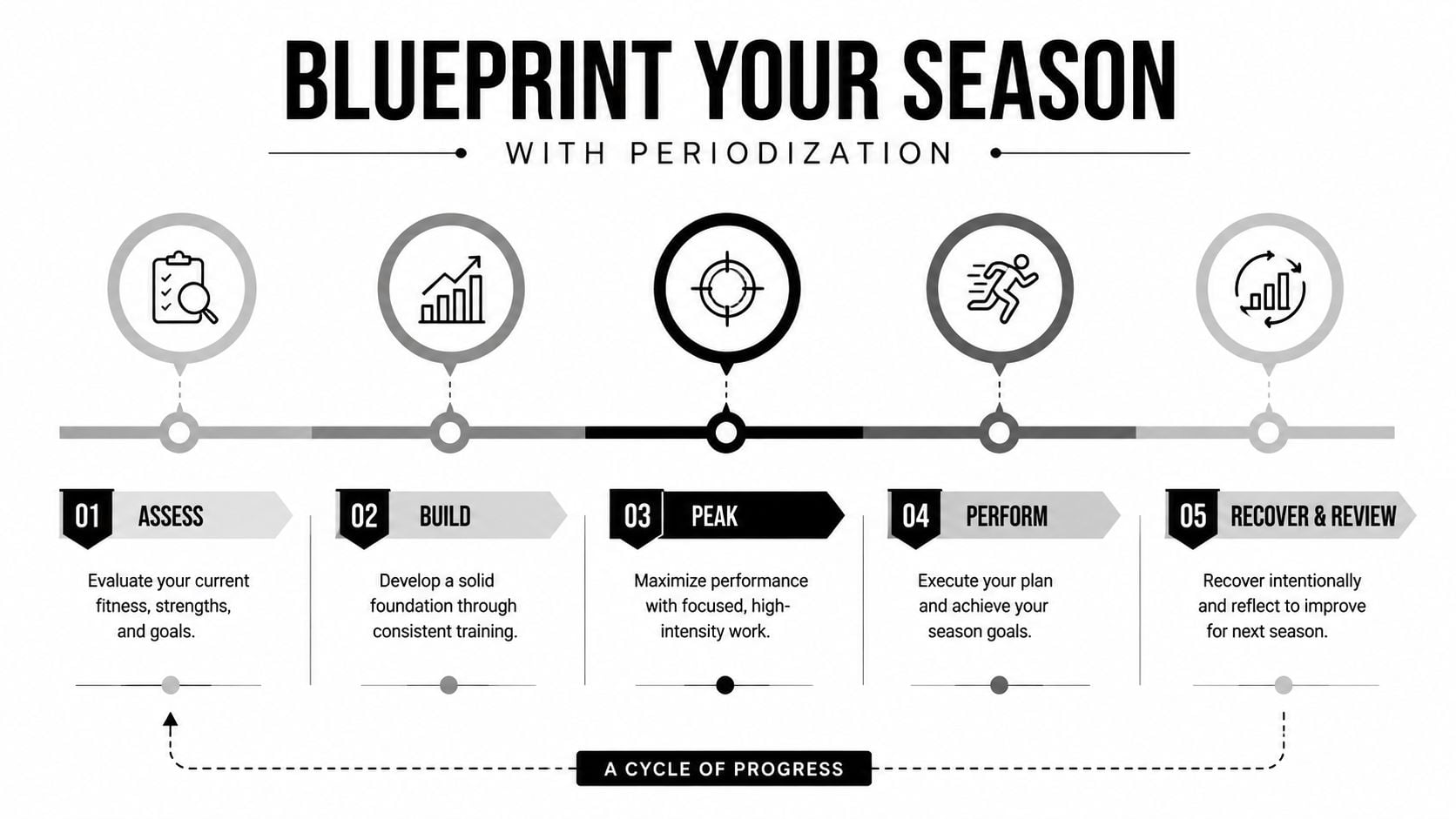
Most athletes and parents already understand this instinctively. Training in July shouldn’t look the same as training in the middle of playoffs. The goal changes across the year, so the structure should change too.
Match the phase to the sport calendar
A useful season plan usually breaks into four broad phases:
| Phase | Primary emphasis |
|---|---|
| Off-season | Build capacity, movement quality, tissue tolerance, and base strength |
| Pre-season | Increase intensity, sharpen speed and power, narrow exercise selection |
| In-season | Maintain strength, manage fatigue, and protect availability |
| Post-season | Recover, address pain points, and rebuild for the next cycle |
For youth athletes in Southeastern Massachusetts, that timeline is often messy. A lot of athletes don’t get a clean off-season anymore. They move from school sport to club sport to camps with very little downtime. That’s one reason a planned system matters so much.
Why block periodization works well for busy athletes
For many athletes, block periodization is the most practical model. Instead of trying to improve everything at once, you emphasize one quality more heavily for a defined block while maintaining the others enough to avoid losing ground.
Research summarized in this peer-reviewed review on periodization notes that periodized strength and conditioning programs can produce substantial changes, including 12 to 18 pounds of lean muscle over a structured 16-week block in average male athletes, while block periodization using high-intensity work such as 90 to 100% of 1RM for maximal strength has shown greater strength gains per training volume than non-periodized approaches, particularly in multi-event athletes. The same review outlines typical loading zones such as 50 to 75% 1RM for hypertrophy, 75 to 90% for basic strength, and 90 to 100% for maximal strength.
That doesn’t mean every high school athlete should live near max lifts. It means training phases should have a purpose.
Train the quality that matters most right now, not every quality equally all year.
If you’re planning ahead for school breaks or a dedicated build phase, PTU also offers off-season sport training options that fit into a larger performance plan.
What changes across the year
The trade-offs are where coaches and clinicians earn their keep.
In the off-season, you can spend more time teaching positions, building work capacity, and fixing obvious weak links. A post-ACL athlete might need a larger dose of unilateral strength and deceleration control. A baseball player may need more posterior chain and rotational medicine ball work. A distance runner often needs enough strength training to support performance without burying the legs before key running sessions.
Pre-season is where many athletes make mistakes. They keep chasing fatigue instead of transferring strength into usable speed and power. Exercise selection usually narrows, intensity rises, and total volume often has to come down.
In-season training is not the time to chase soreness. It’s maintenance with intent. The athlete should leave sessions feeling prepared, not wrecked.
Structure a High-Impact Training Session
The session should be organized enough that the athlete knows what’s coming, but flexible enough that the coach can adjust on the fly.
A good workout doesn’t start with the hardest exercise. It starts by getting the body ready to do quality work.
Use a repeatable session flow
A practical template is RAMP: raise, activate, mobilize, potentiate.
- Raise: Increase body temperature and heart rate with light movement.
- Activate: Turn on the muscle groups the athlete tends to underuse, often glutes, trunk, scapular stabilizers, or foot and ankle support muscles.
- Mobilize: Open the joints that need motion for the session.
- Potentiate: Build toward the day’s main speed or strength demand with skips, jumps, low-volume throws, or progressively heavier warm-up sets.
After the warm-up, the rest of the session usually follows this order:
- Primary movement such as a squat, hinge, press, pull, or sprint variation.
- Secondary strength work that supports the main lift or addresses a weakness.
- Accessory work for unilateral strength, trunk control, or tissue balance.
- Conditioning or energy system work when it fits the phase and sport.
- Cool-down with downregulation, mobility, and a quick recovery check-in.
A youth athlete doesn’t need a circus. They need repeatable structure and enough coaching to perform the basics well.
Progression without guesswork
Progression should be earned, not assumed.
For youth athletes, the NSCA 2+2 rule is a reliable guide. When the athlete can perform two or more reps above the assigned goal in the last set for two consecutive workouts, the load can increase according to this youth program design discussion. The same source warns against imposing professional-level volume on junior athletes, noting that 20+ sets per session can drive burnout and that a lack of proper developmental milestones is associated with 30 to 40% dropout rates.
That’s why session design for younger athletes should stay honest:
- Keep the main work focused: One or two priority lifts is enough.
- Cap junk volume: More exercises don’t equal more adaptation.
- Leave room for sport: The full stress load includes practice, games, and club sessions.
- Teach effort scales: Athletes should learn what a hard but clean set feels like.
For athletes who need a supervised setting instead of a paper template, PTU also runs strength and conditioning training with clinician oversight.
Your Exercise Toolbox for All-Around Athleticism
Exercise selection should solve problems. It shouldn’t just fill time.

The right exercise menu depends on the assessment, the season, and the sport. Still, most good programs pull from the same buckets: foundational strength, explosive power, mobility and stability, then sport-specific adjustment.
Foundational strength
Athletes build the force-producing capacity that supports speed, jumping, contact tolerance, and durability in this phase.
The core categories include:
- Squat patterns: Goblet squat, front squat, split squat, rear-foot raised split squat
- Hinge patterns: RDL, trap bar deadlift, hip thrust
- Upper-body pushes: Push-up, landmine press, dumbbell bench, overhead press variation
- Upper-body pulls: Row variations, pull-downs, pull-ups, chest-supported rows
- Carries: Farmer carries, suitcase carries, front rack carries
The mistake is assuming every athlete needs the same version of those lifts. A runner with low back irritation may do better with trap bar work and split-stance loading than aggressive barbell pulling from the floor. A dancer may need more single-leg strength and trunk control than bilateral max loading.
The best lift is the one the athlete can own, progress, and recover from.
Building explosive power
Power work teaches athletes to express force quickly. That matters for first-step speed, jumping, cutting, and returning from the braking demands of sport.
Power options often include:
- Medicine ball throws: Rotational scoop tosses, chest passes, overhead variations
- Plyometrics: Pogos, snap-downs, box jumps, bounds, low-level hops
- Olympic lift derivatives: High pulls or clean variations when the athlete has the skill and supervision
- Sprint mechanics and acceleration drills: Wall drills, marches, skips, short accelerations
The dosage must match readiness. The athlete who lands stiff, collapses at the knee, or cannot absorb force with control is not ready for the same plyometric menu as the athlete who already shows clean elastic qualities.
Unlocking mobility and stability
Many online templates fall apart because they load patterns without building the control needed to use that strength well.
An important and often overlooked area is anti-movement core training. Exercises such as the Pallof press and bird-dog build trunk stability that helps prevent force transfer problems tied to 30 to 40% of lower extremity injuries, and this matters even more with a reported 25% global rise in youth overuse injuries since 2023 according to this discussion of underused S&C focus areas.
For dancers and post-surgical athletes, this category is not accessory fluff. It’s central.
Useful drills include:
- Anti-rotation: Pallof press, cable holds, half-kneeling press variations
- Anti-extension: Bird-dog, dead bug, body saw progressions
- Anti-lateral flexion: Suitcase carry, offset carry
- Hip and foot stability: Single-leg balance reaches, controlled step-downs, foot intrinsic work
- Shoulder and scapular control: Serratus wall slides, controlled overhead patterns
A post-ACL athlete often needs this trunk and pelvis control before higher-speed cutting looks clean. A dancer often needs strength around end ranges, not just more flexibility.
Sport-specific adaptations
The template changes by sport.
A runner usually needs enough lifting to support stiffness, stride efficiency, and load tolerance without making key run sessions flat. That often means lower volume, high-quality lower-body work, trunk stability, and attention to calf, foot, and hip capacity.
A dancer often benefits from single-leg strength, anti-rotation control, landing mechanics, and foot-ankle resilience. The goal isn’t to make the dancer move like a powerlifter. The goal is to improve force control without stealing movement quality.
A post-ACL athlete needs more than “leg day.” The program should rebuild quadriceps strength, posterior chain contribution, deceleration skill, and confidence under speed. Return-to-sport testing should guide when progression makes sense.
A baseball or softball athlete often needs rotational power, scapular control, and enough lower-body strength to create force from the ground without overloading the throwing side.
Master Recovery and Prevent Injuries
Athletes don’t adapt from training alone. They adapt from training they can recover from.
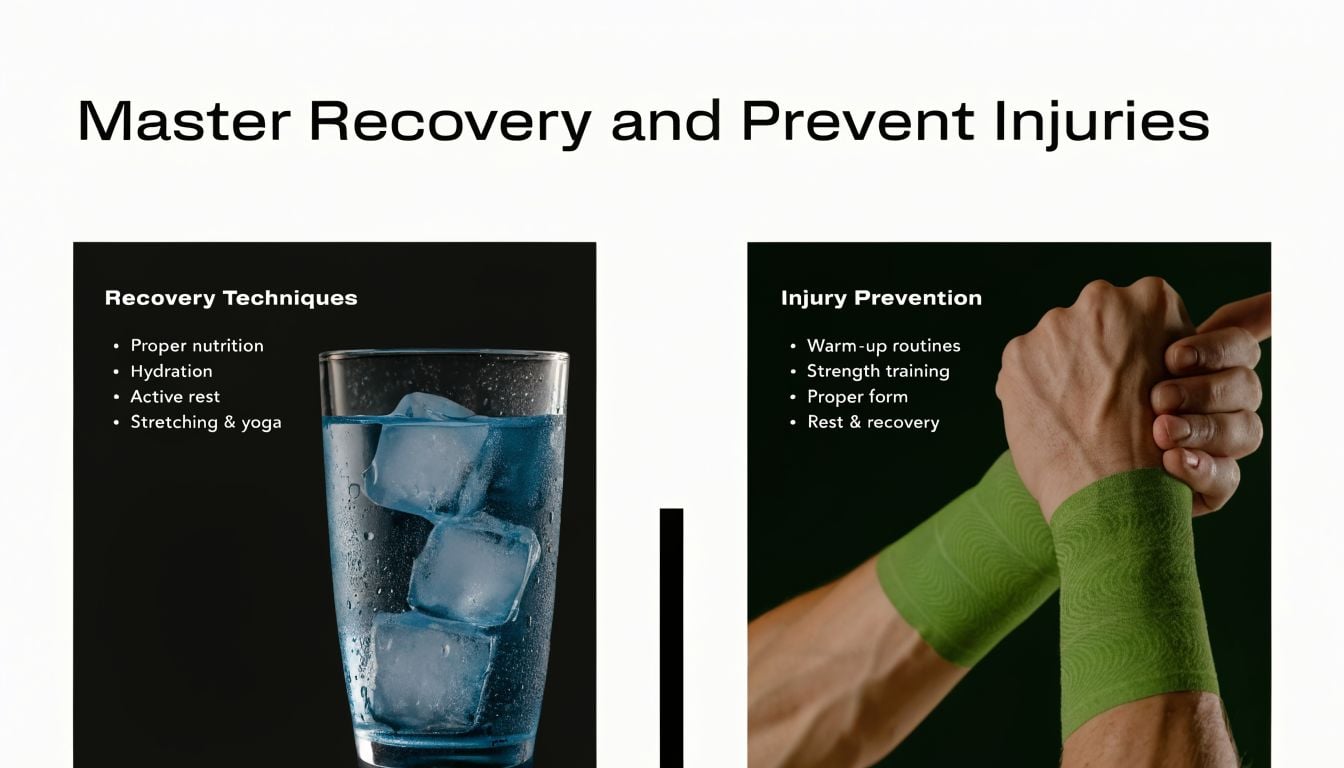
Many high school athletes encounter this common plateau. They practice hard, lift hard, sleep inconsistently, eat on the fly, and wonder why everything feels heavy by midseason. Recovery isn’t passive. It’s part of the training process.
Recovery is part of training
The base layer is still boring and non-negotiable:
- Sleep: If sleep is poor, skill acquisition, recovery, and effort regulation all get worse.
- Nutrition: Underfueled athletes don’t adapt well.
- Hydration: Even mild dehydration changes how sessions feel.
- Schedule control: The best program on paper fails when every day is stacked too hard.
Then there’s active recovery. Light movement, tissue work, mobility, compression, and targeted clinical care can all have a place when they’re matched to the athlete’s needs.
At PTU, one option athletes use within a broader recovery plan is laser therapy when irritability or tissue sensitivity is limiting training tolerance. Other athletes may need running gait analysis, dry needling, or a return-to-sport recheck instead. The point is to use the tool that fits the problem.
Match recovery to the athlete in front of you
Recovery and injury prevention improve when the program respects biomechanics.
Generic plans often miss that an athlete’s structure changes what loading works best. In some cases, athletes with a “Narrow” structural build respond better to more elastic, split-stance training and less heavy bilateral grinding, and programming specific to that profile has been associated with 15 to 20% greater improvement in explosive metrics in this biomechanics-based training discussion. That doesn’t mean labels solve everything. It means build matters.
Here’s what that looks like in practice:
- Runner with recurrent overload symptoms: Reduce unnecessary lifting volume, emphasize split-stance work, calf capacity, trunk stiffness, and monitor weekly run stress.
- Dancer with technique-related pain: Build anti-rotation control, landing strategy, and single-leg capacity rather than chasing fatigue.
- Post-ACL athlete returning to cutting sport: Progress from controlled force absorption to reactive change of direction only when mechanics and confidence hold up.
Good recovery planning doesn’t just lower soreness. It protects the next quality training session.
Your Next Move A Sample Program and Expert Guidance
A sample week helps people see how the pieces fit. It should not be mistaken for a personalized prescription.
Sample off-season weekly template
Sample Off-Season Weekly Template (High School Athlete)
| Day | Focus |
|---|---|
| Monday | Lower-body strength, trunk stability, low-volume jumps |
| Tuesday | Speed mechanics, upper-body strength, mobility |
| Wednesday | Active recovery, light aerobic work, tissue care |
| Thursday | Unilateral lower-body work, medicine ball power, accessory pulling |
| Friday | Total-body lift, short acceleration work, cooldown |
| Saturday | Sport skill session or tempo conditioning based on season demands |
| Sunday | Rest |
This kind of structure works because it separates hard lower-body exposures, protects speed quality, and leaves room for school sport or club demands. A runner might trim Thursday’s lower-body volume and keep Saturday aerobic. A dancer might swap some Friday acceleration work for landing mechanics and anti-rotation control. A post-ACL athlete may need more careful progression around deceleration and cutting drills.
Why a template still needs coaching
Templates are useful for education. They’re weak for decision-making.
True progress happens in adjustment. Did the athlete sleep poorly after exams? Did club practice spike load this week? Does the soccer player from Raynham still show asymmetry on landing? Is the runner from West Bridgewater compensating again when fatigue hits? Those details change the session.
For readers who are considering formal training education, this guide to becoming a personal trainer gives a helpful overview of credentials and expectations. But in a rehab-to-performance setting, especially for runners, dancers, and post-surgical athletes, the clinical layer matters too. That’s where sports physical therapy can close the gap between being cleared to train and being ready to perform.
If you want a strength and conditioning plan built around your sport, injury history, and current movement profile, book an evaluation with Physical Therapy U. Our licensed DPTs work with athletes, runners, dancers, and post-surgical patients across Bridgewater, Buzzards Bay, and Middleborough to build individualized rehab-to-performance programs.
