
As sports physical therapists, our team sees athletes push their limits every single day across Southeastern Massachusetts. One of the most common questions we hear is, "What's the fastest way to recover?" For many, Compression Therapy for Recovery provides a simple, evidence-backed answer. It's essentially a 'smart squeeze' for your muscles that helps kickstart your body’s own powerful healing process.
This content is reviewed by our licensed Doctors of Physical Therapy (DPTs). However, it is for informational purposes only and does not substitute for a personalized evaluation by a healthcare professional.
Table of Contents
- How Compression Therapy Actually Works
- What the Science Says About Athletic Recovery
- Choosing Your Compression Gear: From Socks to NormaTec
- Proven Protocols for Timing and Pressure
- Building Your Complete Recovery Plan
- Safety Precautions and When to Avoid Compression
- Your Compression Therapy Questions Answered
How Compression Therapy Actually Works
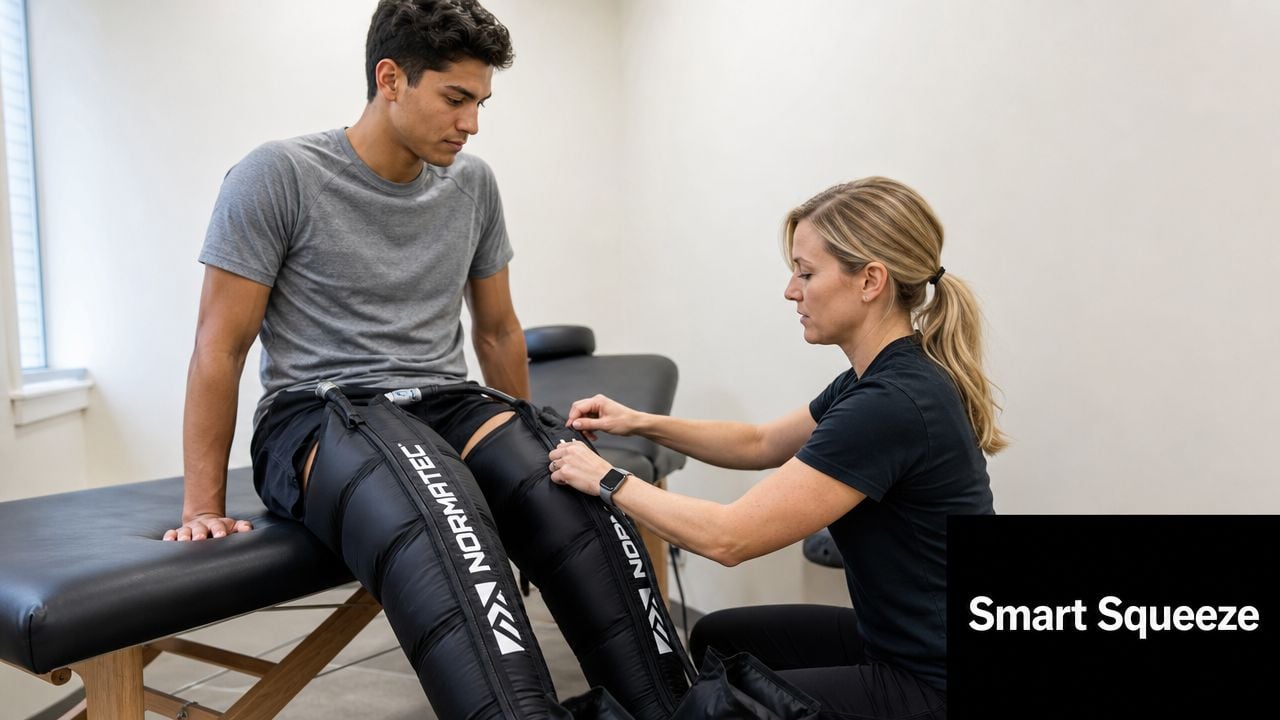
Here at Physical Therapy U, our DPTs often describe compression therapy as a targeted massage, but for your circulatory system. When we apply controlled external pressure to your arms or legs, we can dramatically influence how your body deals with the aftermath of intense exercise.
Imagine your arteries are highways delivering fresh, oxygen-rich blood to your working muscles. Your veins and lymphatic system are the cleanup crew, responsible for clearing out metabolic waste. After a hard workout or game, that waste can accumulate, leading to that heavy, tired feeling and post-exercise soreness.
Compression therapy gives this cleanup crew a serious boost. It helps your veins and lymphatic vessels work more efficiently, preventing fluid from pooling and flushing out metabolic byproducts much faster.
The Two Main Types of Compression
Not all compression is created equal. The right approach depends on your specific goal, whether you're a runner from Plymouth, a dancer from Taunton, or recovering from ACL surgery in Middleborough.
- Static Compression: This is your classic, constant pressure from compression socks or sleeves. They are fantastic for managing swelling during and after activity by providing steady support that prevents fluid from building up. Many of our runners swear by them for long runs or post-race recovery.
- Dynamic Compression: This is a much more active process. Systems like the NormaTec units we use in our Bridgewater, Buzzards Bay, and Middleborough clinics use intermittent pneumatic compression (IPC). Air-filled chambers inflate and deflate in a specific sequence, creating a pulsing or "milking" action that physically pumps fluid and waste out of your limbs.
This dynamic approach is incredibly effective for acute recovery—say, right after a demanding game or a tough return-to-sport testing session. The goal is to slash muscle fatigue and soreness so you can get back to training with less downtime.
What the Science Says About Athletic Recovery
At Physical Therapy U, we are driven by evidence, not trends. When athletes ask us, "Does compression therapy actually work?" we go straight to the research. For Compression Therapy for Recovery, the science gives a clear thumbs-up, especially when it comes to how you feel after a grueling workout.
For years, the logic was simple: squeezing the limbs helps push blood back toward the heart, reduces swelling, and makes your legs feel fresh sooner. This made it a go-to for athletes who needed a quick turnaround between sessions.
Now, that practical wisdom is backed by solid data. While compression won't magically rebuild muscle fibers overnight, studies consistently show it makes a real difference in perceived soreness and fatigue. For athletes in our local Raynham and West Bridgewater communities, those are often the two biggest hurdles to consistent, high-quality training.
The Impact on Muscle Soreness and Fatigue
The first thing most athletes notice is a significant drop in Delayed-Onset Muscle Soreness (DOMS)—that all-too-familiar ache that settles in 24 to 48 hours after a tough effort.
Recent reviews of the research found that using compression within the first few hours post-exercise can blunt DOMS by 20% to 40%. The strongest evidence we have points to pneumatic compression's impact on an athlete's perception of soreness and heaviness, which is absolutely critical for staying mentally and physically ready for what's next.
The most commonly studied protocols—sessions lasting 20 to 30 minutes at around 80 mmHg—show that intermittent pneumatic compression has its clearest effect on how sore you feel, rather than on underlying markers of muscle damage.
This is a key distinction. By improving how recovered you feel, compression therapy helps you maintain the quality and consistency of your training. You can dig into the specifics yourself in this comprehensive review of lower-limb compression studies.
An Evidence-Based Recovery Tool
As sports physical therapists serving South Shore Massachusetts, we integrate tools like NormaTec because the science shows us how to use them effectively. The takeaway is that Compression Therapy for Recovery isn't a cure-all, but it is one of the few recovery methods with a clear, research-backed protocol. It's a proven way to feel less sore and more prepared, helping you bounce back faster from the demands of your sport.
Choosing Your Compression Gear: From Socks to NormaTec
When you're looking at Compression Therapy for Recovery, it’s easy to get overwhelmed by the options. As physical therapists who work with athletes day in and day out, we know that the right choice depends entirely on your specific goals.
Think about it this way: are you trying to manage general soreness after a long run around East Bridgewater, or are you trying to aggressively reduce swelling after ACL surgery? Your answer is the key to deciding between static and dynamic compression.
Static Compression Garments
Static compression is probably what first comes to mind. These are the classic compression socks, sleeves, and tights you see runners and other athletes wear.
They work by providing a constant, steady squeeze. This gentle pressure acts like an external support system for your veins, making it easier for them to push blood and waste products back toward your heart instead of letting fluid pool in your legs.
These garments are fantastic for managing everyday soreness, preventing swelling on a long flight to a competition, or simply getting through a long day on your feet. They're accessible, affordable, and easy to use for daily maintenance.
Dynamic Intermittent Pneumatic Compression (IPC)
This is where recovery technology really gets interesting. Dynamic systems, like the NormaTec units we use in our clinics, don't just provide a constant squeeze. Instead, they use compressed air to create a sequential, pulsing massage.
Imagine a wave of pressure starting at your foot, squeezing, and then releasing as the next chamber up your leg inflates. This active "milking" motion is incredibly effective at flushing out metabolic waste and inflammation from your tissues.
We turn to dynamic IPC for acute recovery situations. It's our go-to for athletes immediately after a tough practice or competition. It's also a crucial tool in post-surgical rehabilitation, helping patients recovering from procedures like ACL reconstruction manage swelling and accelerate healing.
Compression Therapy Options Compared
This table breaks down the common compression methods to help you decide which is the best fit for your recovery needs.
| Therapy Type | Mechanism | Best For | Typical Pressure | When to Use |
|---|---|---|---|---|
| Static Garments | Provides constant, passive pressure to support blood flow. | Daily soreness, travel, preventing swelling during activity. | 15-20 mmHg (light), 20-30 mmHg (firm) | During/after light activity, for travel, or all-day wear. |
| Dynamic IPC (e.g., NormaTec) | Uses sequential, pulsing air compression to actively "milk" fluid away. | Acute post-workout recovery, post-surgical rehab, significant swelling. | Adjustable, often 30-110 mmHg depending on protocol. | 20-30 minute sessions immediately following intense training or rehab. |
Ultimately, there's no single "best" option—it all comes down to your specific needs. Many of the athletes we work with in the greater Plymouth and Taunton area use a combination of both. They might wear compression socks during training for support and then come in for a NormaTec session to accelerate their recovery afterward.
To dig deeper, you can read more about the specific benefits of NormaTec compression boots and see how we integrate them into our programs.
Proven Protocols for Timing and Pressure
To get the full benefits of compression therapy, it's not enough to just throw on the gear. It's about using it correctly—at the right time and with the right settings. At Physical Therapy U, we spend a lot of time with our athletes fine-tuning these protocols, whether they're recovering from a tough game or managing swelling after surgery.
Getting the timing and pressure right is everything. Our guidance comes from a blend of solid research and extensive hands-on experience with athletes across Southeastern Massachusetts. For instance, some reviews show intermittent pneumatic compression can boost lymphatic fluid flow by as much as 400%. That’s a huge reason why that "heavy leg" feeling disappears so quickly. If you want to dig deeper into the science, the Cleveland Clinic's guide to compression therapy is a great resource.
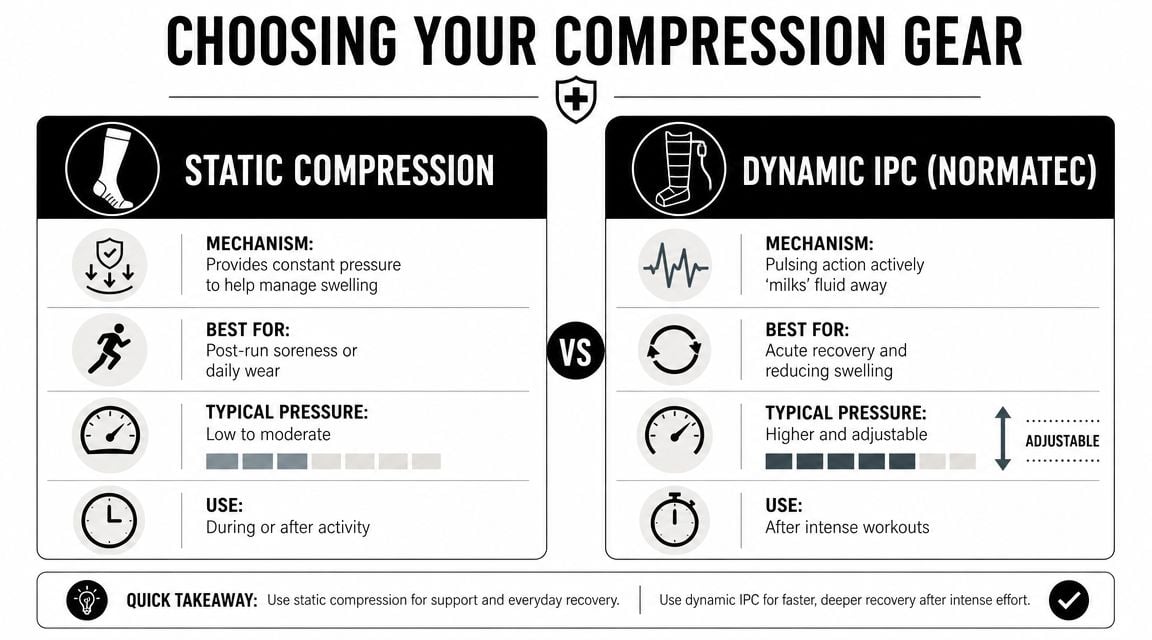
As you can see, the core difference is simple. Static gear provides constant pressure for general support. Dynamic systems, like the popular NormaTec boots, offer an active, pulsing compression that's much more aggressive and targeted for recovery.
Post-Workout Recovery Protocol
For bouncing back after a hard workout, game, or long run, timing is key. You want to get ahead of the inflammation and soreness before they set in.
- When to Use: The sweet spot is within two hours of finishing your activity.
- Duration: A 20-30 minute session is the gold standard, backed by solid evidence.
- Pressure (for IPC): If you're using a system like NormaTec, start around 60-80 mmHg. It should feel like a firm, reassuring squeeze, but never painful.
Post-Surgical Swelling Management
When we work with patients in Bridgewater, Massachusetts, who are recovering from procedures like ACL surgery, controlling swelling is priority number one. Compression is one of our most important tools for this.
Always consult with your surgeon and physical therapist first. Protocols for post-surgical recovery must be individualized.
For post-op recovery, sessions are often shorter but more frequent, and the pressure is almost always kept lower to protect sensitive, healing tissues. The goal is gentle fluid movement, not the aggressive muscle flushing you'd want after a workout. We get the best results by combining compression with other PT techniques, like manual therapy and specific exercises.
Building Your Complete Recovery Plan
At Physical Therapy U, we think of Compression Therapy for Recovery as a powerful tool in our toolbox—but never the only tool. True readiness comes from a smart, integrated approach to recovery, mapped out by a Doctor of Physical Therapy.
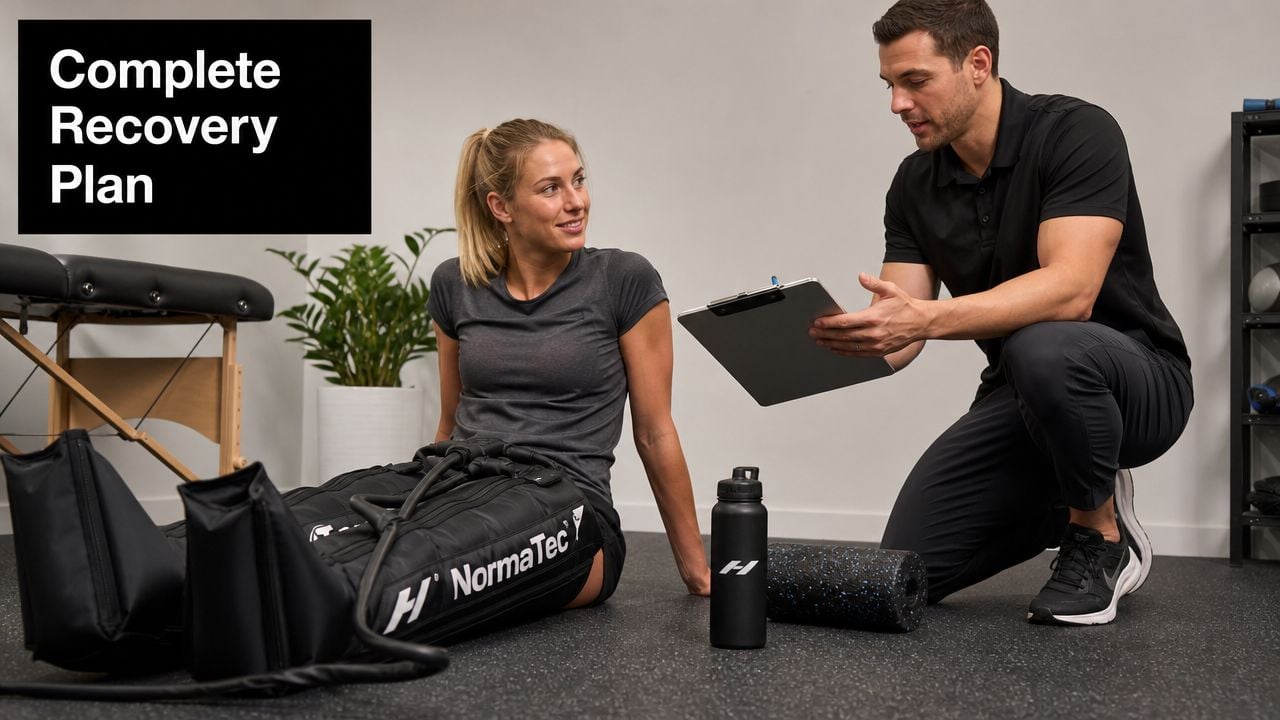
Our clinicians create a powerful synergistic effect by combining a NormaTec session with other targeted treatments. For instance, using compression can prime tissues for hands-on manual therapy or help flush out inflammation after a tough session of dry needling or return-to-sport testing.
Integrating Compression Into Your Schedule
How and when you use compression therapy should change based on your goals and training schedule.
Here are a few real-world examples of how we program it:
- For the In-Season Athlete (e.g., soccer player): We’d recommend a 20-minute NormaTec session within two hours of games or intense practices to kickstart recovery. The goal is rapid recovery to maintain peak performance.
- For the Off-Season Athlete (e.g., distance runner): This is the time to use compression more strategically, maybe 2–3 times per week after your longest or most intense runs. We often pair this with strength work and mobility drills to correct weaknesses identified during a running gait analysis.
- For the Post-Surgical Patient (e.g., ACL repair): Under a PT’s direct guidance, we’ll use short, frequent, low-pressure sessions to manage swelling. This is always combined with gentle range-of-motion exercises, eventually progressing to building back functional strength. We also bring in other modalities, like laser therapy for inflammation, to complement healing.
From our perspective as clinicians, the science behind pneumatic compression is nuanced. While some studies show only trivial to small effects on muscle function, others have found that functional recovery in runners can be up to 6% faster within 48 hours. This is exactly why we see compression not as a miracle cure, but as a critical support tool within a larger, personalized plan.
A Holistic Approach to Recovery
An effective recovery plan goes far beyond any single treatment. Smart programming, proper nutrition, and quality sleep are the non-negotiable foundations of any successful athlete’s regimen. For a deeper dive, these athlete recovery insights for optimal results provide an excellent overview.
At our clinics in Bridgewater, Buzzards Bay, and Middleborough, we help athletes build these comprehensive plans every day. By combining proven hands-on therapy with the right technology, we make sure you aren’t just recovering—you’re getting stronger and more resilient.
Safety Precautions and When to Avoid Compression
Compression therapy is an incredible recovery tool, but like any powerful intervention, you have to know when not to use it. Our first rule as physical therapists is always "do no harm."
We strongly advise against using compression therapy if you have certain underlying conditions, at least not without getting a green light from your physician.
When to Consult a Professional First
If any of the following conditions sound familiar, you must get clearance from your doctor or one of our DPTs before starting a compression program.
- Deep Vein Thrombosis (DVT): Applying aggressive pressure could potentially dislodge a blood clot, which is extremely dangerous.
- Congestive Heart Failure (CHF): These systems push a lot of fluid back toward your core, which can put unsafe strain on an already overworked heart.
- Active Infections or Cellulitis: Squeezing an infected area can spread the infection.
- Severe Peripheral Artery Disease (PAD): When blood flow to your limbs is already compromised, you do not want to restrict it further.
- Pulmonary Embolism (PE): This is an absolute contraindication for compression therapy.
Don't guess with your health. When in doubt, always ask a professional. A quick consultation at our Bridgewater, Massachusetts clinic can ensure you're using recovery tools that help, not hurt.
Your Compression Therapy Questions Answered
As sports physical therapists working with athletes all over Southeastern Massachusetts, we get asked about new recovery gadgets all the time. Let's tackle some of the most common questions we hear about Compression Therapy for Recovery.
Can compression therapy help shin splints?
Yes, it can, but it's crucial to understand its role. A compression sleeve provides support and boosts circulation, which helps manage the immediate pain and swelling from shin splints. Think of it as a tool for symptom relief, not a permanent fix.
Shin splints are usually a warning sign of a bigger problem—often related to your training volume, footwear, or running mechanics. That's why we always pair symptom management with a proper running gait analysis to find and correct the source of the problem.
Is NormaTec better than an ice bath?
They are different tools for different jobs. An ice bath (cold water immersion) is about clamping down on inflammation and dulling pain right after a session causes acute tissue damage. It’s a powerful anti-inflammatory.
NormaTec, on the other hand, is built to improve circulation and help your lymphatic system flush out metabolic waste. This is what helps reduce next-day muscle soreness (DOMS).
Think of it like this: an ice bath is like hitting the emergency brake on acute inflammation. NormaTec is like sending in a high-tech cleanup crew to speed up the recovery process. The best choice depends on what your body needs most after that specific workout.
How long should I use compression after ACL surgery?
This must be guided by your physical therapist, as every ACL recovery is unique. Generally, we use compression frequently in the early post-operative phase. The main goal is to aggressively manage swelling, which is a major roadblock to restoring knee motion and quad muscle function.
As you progress in your rehab, it may be used less often but can remain a key part of your plan for weeks or even months to support the healing process all the way through your return to sport. We often pair it with other tools, like Kinesiology tape, to give you every advantage.
Can I use compression before a workout?
Absolutely. A quick 10-15 minute session with a pneumatic compression system before you train can be a fantastic part of a warm-up. It gets the blood moving and can make your muscles feel lighter and more prepared for action. It’s not a substitute for a dynamic warm-up, but it's an excellent way to prime the system.
Ready to see how Compression Therapy for Recovery can fit into your training or rehab? At Physical Therapy U, we don't just hand you a tool; we build a personalized strategy that blends hands-on care with the right technology to get you back to your sport faster and stronger.
Book an appointment today at our Bridgewater, Buzzards Bay, or Middleborough clinic.
